🚶♂️ 7' - ⛰️ 270 MSL - 🧭 SE
☀️Almost all day / Quasi tutto il giorno
🇬🇧/🇺🇸
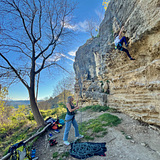
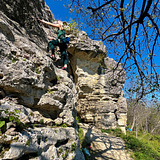
Bagnolo is the quintessential crag for climbers from Forlì. It is very popular despite its small size, largely due to the scarcity of other climbing options in the Romagna region.
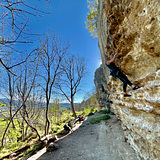
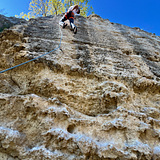
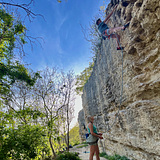
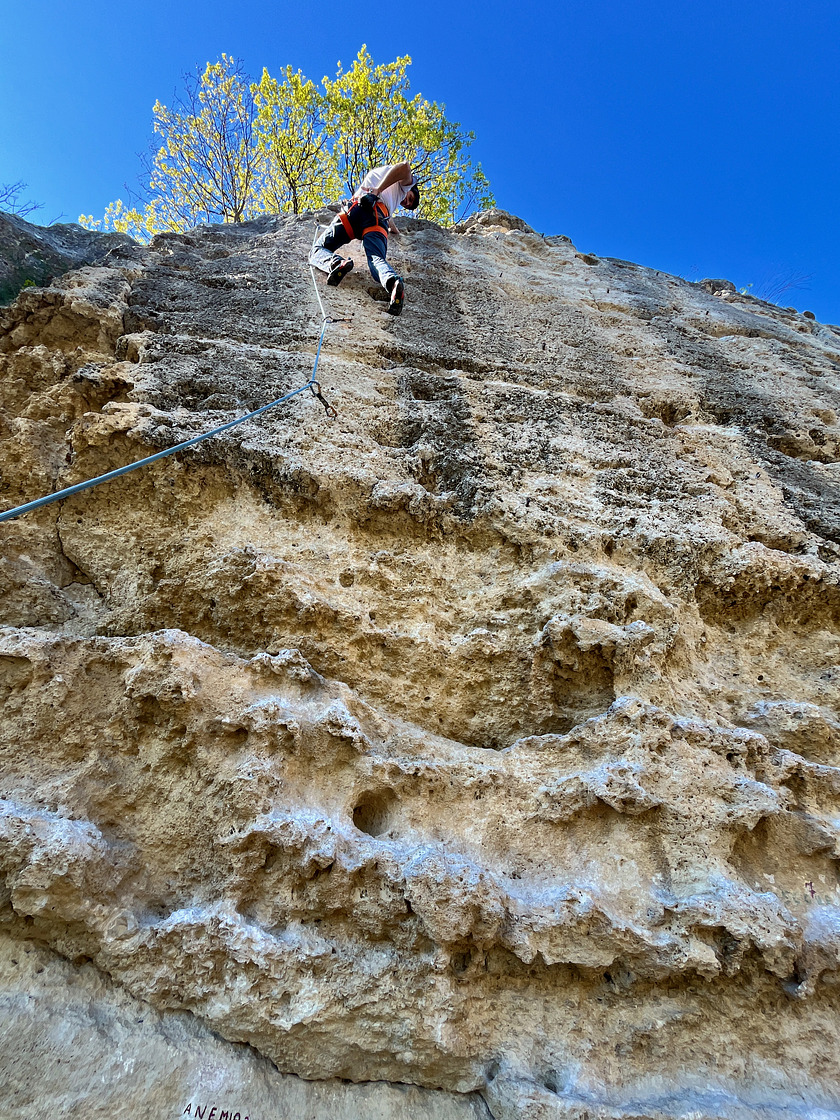
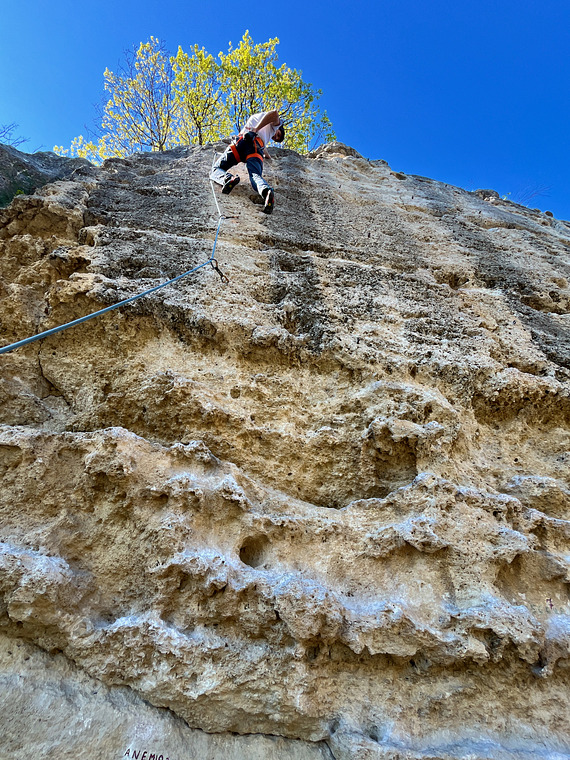
The crag features a rather short wall made of "spungone," a calcareous sedimentary rock rich in fossils and shells. Despite years of heavy traffic, this rock remains quite aggressive and rough on the skin.
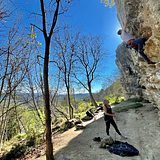
The climbing style is mostly characterized by pockets, although jugs, crimps, and slopers are also present. The routes tend to be short and intense. In total, there are 50 routes ranging from 4a to 7a+. Among the most interesting lines are Via dei devastati, Lo scorpione, Notte delle streghe, Cazzotin, Atomic Camomilla (a historic test piece), Ciolanca sbilenca, and Vomitata bianca. Noteworthy is also the long traverse that develops just a few centimeters off the ground, typically climbed from left to right by lone climbers looking for a good training session. If done back and forth, the traverse is about 150 meters long, with boulder sequences exceeding the 6B grade.
The bolting is very varied: you will find everything from modern small glue-in bolts to expansion bolts, older cemented anchors, alpine pitons, and even threads on handlebars. In any case, the hardware needs a general revision, so pay close attention when climbing the older routes.
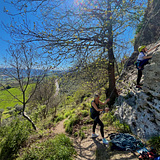
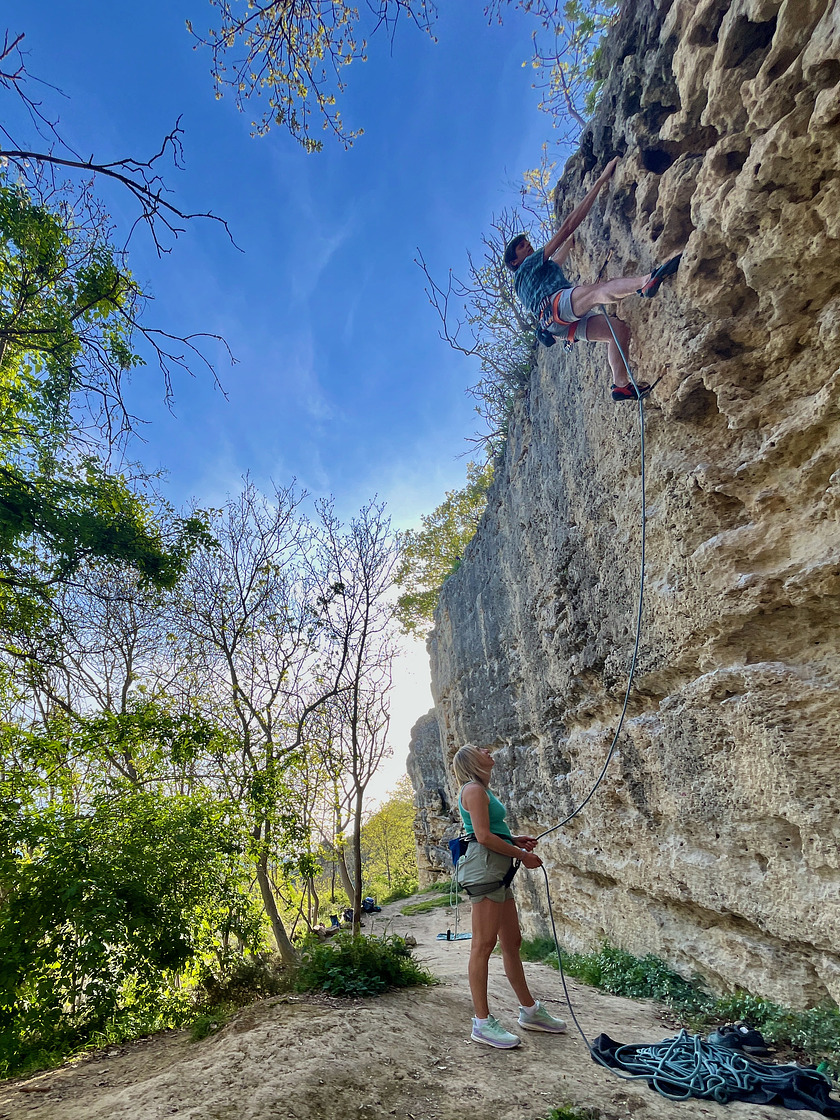
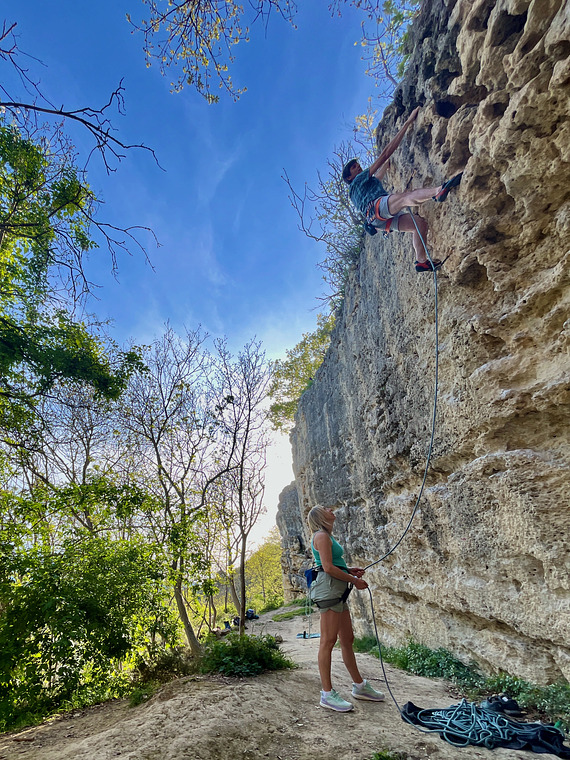
The crag faces South-East, remaining in the shade from the late afternoon onwards, which makes it quite scorching during the summer. The approach is convenient, and the base of the wall is flat and comfortable, making it suitable for families with children.
On your rest days, the nearby town of Castrocaro Terme is famous for its thermal baths, the perfect place to relax sore muscles. You can also explore the fascinating Renaissance fortress city of Terra del Sole, or simply dive into the rich culinary traditions of Romagna, enjoying a classic piadina paired with a glass of excellent local Sangiovese wine.
🇮🇹
Bagnolo è la falesia per eccellenza dei Forlivesi, molto frequentata nonostante le piccole dimensioni vista la scarsità di altre opzioni in Romagna.
La falesia è caratterizzata da un muro piuttosto basso di "spungone", una roccia sedimentaria calcarea, ricca di fossili e conchiglie. Questa roccia, nonostante i moltissimi anni di frequentazione, risulta ancora piuttosto aggressiva e ruvida.
Le vie si sviluppano principalmente a buchetti, anche se non mancano manettoni, tacche e svasi. Lo stile di scalata è tendenzialmente corto e intenso. In totale sono presenti 50 vie che vanno dal 4a al 7a+. Tra i tiri più interessanti abbiamo Via dei devastati, Lo scorpione, Notte delle streghe, Cazzotin, Atomic Camomilla (storico banco di prova), Ciolanca sbilenca e Vomitata bianca. Degno di nota è anche il lungo traverso che si sviluppa a pochi centimetri dal suolo, percorso solitamente da sinistra verso destra da arrampicatori solitari in cerca di allenamento. Se fatto in andata e ritorno, il traverso è lungo circa 150 metri, con passaggi di blocco di oltre il 6B.
La chiodatura è molto varia, si passa da ferle resinate piccole e moderne, a chiodi a pressione, ferle cementate datate a chiodi da alpinismo, e non mancano nemmeno cordini nelle clessidre. In ogni caso la chiodatura sarebbe da rivedere integralmente, quindi prestate molta attenzione sulle vie più vecchie.
La falesia è esposta a Sud-Est, va in ombra dal tardo pomeriggio, e risulta piuttosto torrida in estate. L’avvicinamento è comodo e anche la base della parete è confortevole e adatta alle famiglie.
Per i giorni di riposo, la vicina Castrocaro Terme offre famosi stabilimenti termali, ideali per rilassarsi dopo aver scalato. Merita sicuramente una visita l'affascinante fortezza rinascimentale di Terra del Sole. Ovviamente, non dimenticate di godervi la rinomata enogastronomia romagnola, magari accompagnando una classica piadina con un buon bicchiere di Sangiovese.
🇬🇧/🇺🇸
Bagnolo is a crag rich in history, recognized as one of the first places where climbing was born in Romagna during the 1970s, when the wall was frequented mainly for its traverse. Then bolts arrived! Among the main bolters, we remember Daniele Mengozzi, Marzio Marchi, Gianluca Bargossi, Emilio Borin, Stefano Tomidei, Giovanni Capanni, and the local C.A.I. section of Forlì (1986/1987).
The history behind the bolting of this crag is incredibly fascinating. Daniele Mengozzi managed to bolt dozens of routes in a single day after recovering 300 meters of electrical cable (made of short pieces joined together with electrical tape) and connecting it to the nearby restaurant “La collina” to power his corded drill.
Finally, we fondly remember the historic route Atomic Camomilla, which was used years ago by local climbers as the ultimate test piece.
🇮🇹
È una falesia ricca di storia, uno dei primi luoghi dove è nata l'arrampicata in Romagna (anni '70), quando la parete era frequentata principakmente per il suo traverso. Poi sono arrivati i chiodi! Tra i principali chiodatori ricordiamo Daniele Mengozzi, Marzio Marchi, Gianluca Bargossi, Emilio Borin, Stefano Tomidei, Giovanni Capanni e il C.A.I. di Forlì (1986/1987).
La storia della chiodatura ha dell'incredibile ed è molto interessante. Daniele Mengozzi riuscì in un'unica giornata a chiodare decine di vie dopo aver recuperato 300 metri di cavo elettrico (spezzettoni di filo uniti da nastro isolante) collegato direttamente al ristorante “La collina” per poter alimentare il suo trapano a filo.
Ricordiamo infine con piacere la via storica Atomic Camomilla, usata anni fa dagli scalatori locals come banco di prova.