IT
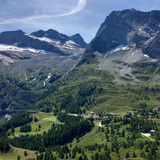
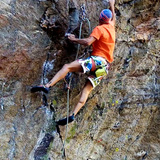
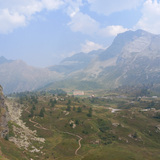
La zona del Passo del Sempione, oltre a offrire panorami mozzafiato e un gran numero di trekking e passeggiate, presenta anche una bella scelta di vie di arrampicata sportiva immerse in un bucolico ambiente alpino.
Sono infatti circa un'ottantina i tiri presenti suddivisi in vari settori.
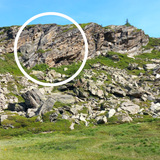
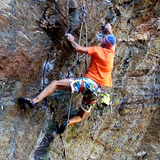
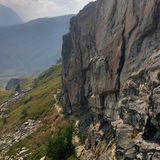
In particolare, i settori "inferiore" e "superiore" offrono un'ampia gamma di vie di sesto e settimo grado, su una bella roccia lavorata a tacche spesso oblique, lame e fessurazioni con un'arrampicata abbastanza completa: tecnica e atletica seppur non particolarmente strapiombante.
Il "Settore Monte Leone", meno frequentato, offre invece una manciata di tiri complessivamente più facili e abbordabili, a 10 minuti dal parcheggio.
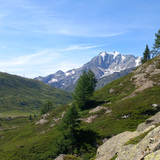
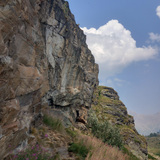
Particolare il poco conosciuto e appartato settore "Stalde": placche, fessure, diedri, spigoli e risalti che conferiscono al tutto un aspetto un po alpinistico, accentuato anche dal meraviglioso panorama col massiccio del Monte Leone sullo sfondo (consigliato qui l'uso del casco).
Le falesie vanno in ombra circa a metà pomeriggio, tuttavia, vista la quota, il periodo per scalarci è generalmente estivo poichè nelle mezze stagioni può facilmente fare abbastanza freddo.
GB
The Simplon Pass area, as well as offering breathtaking views and a wide range of treks and walks, also boasts a fine selection of sport climbing routes set in an idyllic alpine setting.
In fact, there are around eighty routes, divided into various sectors.
In particular, the ‘Inferiore’ and ‘Superiore’ sectors offer a wide range of Grade 6 and 7 routes, on good rock featuring often oblique crimps, flakes and cracks, providing a fairly well-rounded climbing experience: technical and athletic, though not particularly overhanging.
The ‘Monte Leone Sector’, which is less frequented, offers a handful of routes that are, on the whole, easier and more accessible, just 10 minutes from the car park.
Of particular note is the little-known and secluded “Stalde” sector: slabs, cracks, dihedrals, edges and ledges that give the whole area a somewhat alpine feel, further accentuated by the marvellous panorama with the Monte Leone massif in the background (the use of a helmet is recommended here).
The crags are in the shade by mid-afternoon; however, given the altitude, the best time to climb here is generally in summer, as it can easily get quite cold in the shoulder seasons.